
Neuroconstructionist
Master Coach
Transformational Coaching Program | ICF Level 1 + Level 2 + CCEs

Transformational Change
Develop transformational coaching skills and facilitate rapid, deep, and lasting change with the Neuroconstructionist Coaching methodology.

Constructionist Approach
Grounded in predictive processing and psychological construction theory, and informed by research on intrinsic brain networks, interoception, grounded cognition, and constructivist psychology.

A New Generation of Coaches
Join the first generation of coaches and other helping professionals who work with how the brain constructs psychological life and guides behavior.
Facilitate Rapid, Deep, and Lasting Change
Program Overview: three 12-week stages, from Neuroscience Coaching foundations to advanced Neuroconstructionist Coaching.
Neuroscience Coach Training


Introduction to Neuroconstruction
Upon completion of this unit you will be able to:
- Explain why it’s important to work with the client’s subjective, constructed experience, rather than taking a one-size-fits-all coaching approach.
- Explain how the brain creates psychological states and our personal reality, and why this matters for coaching.
- Take a neuroconstructionist approach when working with first-order change (behavior change).
- Describe why a constructionist, neuroscience-informed approach changes what coaching works on.
Coaching The Ideal Self
Upon completion of this unit you will be able to:
- Understand the Ideal Self as a key driver of purposeful change and sustained motivation.
- Explore the contrast between the Ideal Self and the Ought Self, and how each shapes emotional and cognitive states.
- Understand how envisioning a desired future self supports openness to new ideas, future-oriented thinking, and long-term goal orientation.
- Use evidence-based coaching strategies to help clients articulate a clear, emotionally resonant vision of who they want to become.
- Integrate the Ideal Self into coaching sessions, helping clients develop identity-based goals that align who they want to become with their daily actions.
Vision, Values, & Emotional Attractors
Upon completion of this unit you will be able to:
- Explain the importance of personal vision and purpose in giving direction and meaning to change.
- Understand the role of positive and negative emotional attractors in opening clients up to change or narrowing them into defensiveness.
- Help clients articulate a personal vision that captures what they want their life and work to be about.
- Help clients clarify their core values, and distinguish them from preferences, habits, and inherited expectations.
- Use a neuroscience-informed approach to understand how values guide what clients notice, prioritize, and find rewarding.
- Coach with curiosity to connect a client’s vision and values to the goals and decisions in front of them.
- Help clients recognize when their actions are out of step with their values, and identify small, values-aligned steps forward.


Working With Meaning & Motivational Coherence
Upon completion of this unit you will be able to:
- Explore how the brain constructs meaning from language and experience, and why this matters in coaching conversations.
- Learn how to identify and unpack the subjective meaning behind the words clients use to avoid assumptions and misinterpretations.
- Practice “slowing down” to surface the deeper cognitive and emotional frames driving client behavior.
- Understand how meaning is actively constructed by each person’s brain, shaped by prior experiences, values, and identity.
- Apply neuroscience-informed strategies to co-create new perspectives and meaning structures that support desired change.
Forming New Habits & Managing Rewards
Upon completion of this unit you will be able to:
- Understand the neuroscience of how habits are formed, so you can help clients to start taking charge of the habits that impact their life.
- Identify the specific behaviors and habits that need to change to unlock potential.
- Leverage the brain's valuation system to "tip" into a new behavior and reinforce it for long-term change.
- Know when to use motivation, immediate action, or micro celebration to establish and reinforce new behaviors.
- Examine the neuroscience of motivation: how the brain assigns subjective value and how this shapes goals, decision-making, and behavior.
- Draw from the neuroscience-based habit formation map, so you know exactly what part of the habit process to focus on for rapid and lasting change.
Making Behavior Change Stick
Upon completion of this unit you will be able to:
- Use evidence-based behavior change strategies to help clients define their ideal future and recognize their obstacles to success.
- Identify when to shift from visioning and future-oriented questioning to problem solving and planning (timing this correctly accelerates results).
- Help clients gain insight into the barriers preventing them from changing their behavior.
- Create an action plan so that clients know exactly what to work on, and can start taking action immediately (an invaluable but often overlooked step in behavior change).


Emotions, Avoidance & Goal Pursuit
Upon completion of this unit you will be able to:
- Help clients work with the brain’s affective and emotional “systems.”
- Describe to clients how the brain makes emotions, so they understand they have more influence over their experience than they think.
- Use affect awareness and values-based action to manage emotional states during goal pursuit.
- Help clients develop an acceptance-based way of being, so they’re less derailed by unhelpful emotions as they meet obstacles and challenges in pursuing their goals.
Solving Problems & Making Decisions
Upon completion of this unit you will be able to:
- Describe the how, why and when of insight and analytical thinking as thought-modalities for problem solving and decision making.
- Highlight why the biggest issue when faced with a problem or decision is not the problem or decision itself, but the brain's response, and how to address it.
- Utilize a neuroscience-based coaching process to facilitate insight-solutions to problems.
Coaching Work & Life Challenges
Upon completion of this unit you will be able to:
- Describe the differences between permanent and personal domains of human concern.
- Design the domains of concern that clients will observe and assess their lives with.
- Bring clients' awareness to the unavoidable concerns of life, so they can act to take care of them.
- Develop a life concerns map for each client, to help guide them toward a new way of being.

Introduction to Neuroconstruction
Upon completion of this unit you will be able to:
- Explain why it’s important to work with the client’s subjective, constructed experience, rather than taking a one-size-fits-all coaching approach.
- Explain how the brain creates psychological states and our personal reality, and why this matters for coaching.
- Take a neuroconstructionist approach when working with first-order change (behavior change).
- Describe why a constructionist, neuroscience-informed approach changes what coaching works on.

Coaching The Ideal Self
Upon completion of this unit you will be able to:
- Understand the Ideal Self as a key driver of purposeful change and sustained motivation.
- Explore the contrast between the Ideal Self and the Ought Self, and how each shapes emotional and cognitive states.
- Understand how envisioning a desired future self supports openness to new ideas, future-oriented thinking, and long-term goal orientation.
- Use evidence-based coaching strategies to help clients articulate a clear, emotionally resonant vision of who they want to become.
- Integrate the Ideal Self into coaching sessions, helping clients develop identity-based goals that align who they want to become with their daily actions.

Vision, Values, & Emotional Attractors
Upon completion of this unit you will be able to:
- Explain the importance of personal vision and purpose in giving direction and meaning to change.
- Understand the role of positive and negative emotional attractors in opening clients up to change or narrowing them into defensiveness.
- Help clients articulate a personal vision that captures what they want their life and work to be about.
- Help clients clarify their core values, and distinguish them from preferences, habits, and inherited expectations.
- Use a neuroscience-informed approach to understand how values guide what clients notice, prioritize, and find rewarding.
- Coach with curiosity to connect a client’s vision and values to the goals and decisions in front of them.
- Help clients recognize when their actions are out of step with their values, and identify small, values-aligned steps forward.
Working With Meaning & Motivational Coherence
Upon completion of this unit you will be able to:
- Explore how the brain constructs meaning from language and experience, and why this matters in coaching conversations.
- Learn how to identify and unpack the subjective meaning behind the words clients use to avoid assumptions and misinterpretations.
- Practice “slowing down” to surface the deeper cognitive and emotional frames driving client behavior.
- Understand how meaning is actively constructed by each person’s brain, shaped by prior experiences, values, and identity.
- Apply neuroscience-informed strategies to co-create new perspectives and meaning structures that support desired change.
Forming New Habits & Managing Rewards
Upon completion of this unit you will be able to:
- Understand the neuroscience of how habits are formed, so you can help clients to start taking charge of the habits that impact their life.
- Identify the specific behaviors and habits that need to change to unlock potential.
- Leverage the brain's valuation system to "tip" into a new behavior and reinforce it for long-term change.
- Know when to use motivation, immediate action, or micro celebration to establish and reinforce new behaviors.
- Examine the neuroscience of motivation: how the brain assigns subjective value and how this shapes goals, decision-making, and behavior.
- Draw from the neuroscience-based habit formation map, so you know exactly what part of the habit process to focus on for rapid and lasting change.
Making Behavior Change Stick
Upon completion of this unit you will be able to:
- Use evidence-based behavior change strategies to help clients define their ideal future and recognize their obstacles to success.
- Identify when to shift from visioning and future-oriented questioning to problem solving and planning (timing this correctly accelerates results).
- Help clients gain insight into the barriers preventing them from changing their behavior.
- Create an action plan so that clients know exactly what to work on, and can start taking action immediately (an invaluable but often overlooked step in behavior change).

Emotions, Avoidance & Goal Pursuit
Upon completion of this unit you will be able to:
- Help clients work with the brain’s affective and emotional “systems.”
- Describe to clients how the brain makes emotions, so they understand they have more influence over their experience than they think.
- Use affect awareness and values-based action to manage emotional states during goal pursuit.
- Help clients develop an acceptance-based way of being, so they’re less derailed by unhelpful emotions as they meet obstacles and challenges in pursuing their goals.
Solving Problems & Making Decisions
Upon completion of this unit you will be able to:
- Describe the how, why and when of insight and analytical thinking as thought-modalities for problem solving and decision making.
- Highlight why the biggest issue when faced with a problem or decision is not the problem or decision itself, but the brain's response, and how to address it.
- Utilize a neuroscience-based coaching process to facilitate insight-solutions to problems.
Coaching Work & Life Challenges
Upon completion of this unit you will be able to:
- Describe the differences between permanent and personal domains of human concern.
- Design the domains of concern that clients will observe and assess their lives with.
- Bring clients' awareness to the unavoidable concerns of life, so they can act to take care of them.
- Develop a life concerns map for each client, to help guide them toward a new way of being.
Neuroconstructionist Professional Coach Training

Neuroconstructionist Coaching
Upon completion of this unit you will be able to:
- Describe how psychological life is actively constructed by core psychological ingredients that are managed by intrinsic brain networks, rather than produced by fixed mental faculties.
- Explain how traditional interventions target outputs (e.g., behavior, thought, or emotion), whereas lasting transformation requires revising the brain’s generative model: the predictive architecture that constructs meaning, experience, sense of self, and view of the world.
- Understand how prior learning shapes perception, action, and identity, and guide coachees to construct new ways of being that expand their range of effective actions.
- Use the principles of psychological construction and predictive processing to support deep, system-wide change across emotional, cognitive, and behavioral domains.
Coaching The Constructed Self
Upon completion of this unit you will be able to:
- Understand the self as an active construction: a predictive self-model that forecasts who the coachee is, what they can do, and what is possible for them, rather than a fixed identity waiting to be discovered.
- Revisit the Ideal Self and Ought Self through a neuroconstructionist lens, distinguishing self-authored aspirations from inherited “shoulds” and recognizing how each shapes motivation, emotion, and action.
- Recognize how identity priors (long-held beliefs about who one is) limit a coachee’s range of effective action, and why goals that conflict with the self-model tend to stall.
- Help coachees construct an Ideal Self that is vivid and coherent enough to act as a new prediction: one they can rehearse, test, and gather evidence for in daily life.
- Work with the gap between current and ideal self without triggering threat, using small identity-consistent actions that update the self-model one experience at a time.
- Use the Self Band to locate where a coachee’s self-construction is generating stuckness, and choose the lightest intervention that resolves it.
Coaching the Architecture of Experience
Upon completion of this unit you will be able to:
- Understand meaning-making as an active, predictive process that constructs personal reality through language and prior experience.
- Recognize how language both reflects and shapes a coachee’s conceptual scaffolding, including identity, values, and perceived possibilities.
- Gain insight into your own linguistic patterns and how they generate psychological experiences, emotions, and actions.
- Identify and work with the structure of meaning-making—including categories and concepts—to help coachees loosen rigid interpretations and construct more adaptive realities.
- Use the Change Cycle to loosen automatic meaning patterns, surface underlying rigid conceptual structures, and open space for new interpretations and shifts in self-perception.

Interoception, Affect, and Somatic Intelligence
Upon completion of this unit you will be able to:
- Describe the role of somatic awareness in shaping experience, and how attending to bodily signals can support self-awareness, relationships, and performance.
- Distinguish between interoceptive and exteroceptive awareness, and guide coachees in shifting flexibly between internal states and external cues to construct a more useful, adaptive map of their experience.
- Explain how core affect—arising from bodily signals—underpins all psychological states, including perception, cognition, emotion, and behavior.
- Facilitate somatic and embodied shifts that allow coachees to move from reactive states to more grounded, coherent ways of being.
- Help coachees notice postures and physiological habits that accompany unhelpful patterns, and use somatic cues to support shifts in meaning.
Embodying Strengths & Guiding Philosophies
Upon completion of this unit you will be able to:
- Distinguish between a virtue or strength as a trait a coachee has and a Principle they choose to stand for, and why only the second changes how they act.
- Work with virtues and character strengths to help coachees identify the strengths that already serve them and the ones a situation calls for.
- Help coachees embody a strength as a way of being: clarifying what it means to them, recalling a time they lived it, and feeling how they stand, speak and act from it.
- Apply an embodied strength to a specific task or goal, and test it in action through a single real-world experiment.
- Help coachees identify a guiding philosophy, such as stoicism, existentialism or one of their own, and draw on it deliberately as a stable anchor in a current challenge.
- Recognize when a coachee’s stuckness is a Core Motives bottleneck: the meaning supports the move and the body is settled, but the action still conflicts with what matters to them.
Coaching Values Conflicts
Upon completion of this unit you will be able to:
- Recognize the signs of a values conflict: “I know I should, but…”, ambivalence that persists after the meaning is clear, and follow-through that collapses into delay, over-preparation or appeasement.
- Distinguish stable Principles from situational Priorities, and understand why a move fails when the priority a coachee is protecting isn’t the one their goal needs.
- Tell a genuine priority clash (two values both held, such as candor and the relationship) from a moralized polarity (one value fused to a loaded axis, such as rest read as laziness), and route each to the right kind of work.
- Use the Protected-Value Move to name the value that must not be sacrificed, foreground the priority that should lead, and design one small action that honors both.
- Help coachees resolve recurring conflicts, such as perfection vs. momentum, honesty vs. kindness, or ambition vs. rest, without abandoning either value.
Neuroconstructionist Coaching
Upon completion of this unit you will be able to:
- Describe how psychological life is actively constructed by core psychological ingredients that are managed by intrinsic brain networks, rather than produced by fixed mental faculties.
- Explain how traditional interventions target outputs (e.g., behavior, thought, or emotion), whereas lasting transformation requires revising the brain’s generative model: the predictive architecture that constructs meaning, experience, sense of self, and view of the world.
- Understand how prior learning shapes perception, action, and identity, and guide coachees to construct new ways of being that expand their range of effective actions.
- Use the principles of psychological construction and predictive processing to support deep, system-wide change across emotional, cognitive, and behavioral domains.
Coaching The Constructed Self
Upon completion of this unit you will be able to:
- Understand the self as an active construction: a predictive self-model that forecasts who the coachee is, what they can do, and what is possible for them, rather than a fixed identity waiting to be discovered.
- Revisit the Ideal Self and Ought Self through a neuroconstructionist lens, distinguishing self-authored aspirations from inherited “shoulds” and recognizing how each shapes motivation, emotion, and action.
- Recognize how identity priors (long-held beliefs about who one is) limit a coachee’s range of effective action, and why goals that conflict with the self-model tend to stall.
- Help coachees construct an Ideal Self that is vivid and coherent enough to act as a new prediction: one they can rehearse, test, and gather evidence for in daily life.
- Work with the gap between current and ideal self without triggering threat, using small identity-consistent actions that update the self-model one experience at a time.
- Use the Self Band to locate where a coachee’s self-construction is generating stuckness, and choose the lightest intervention that resolves it.
Coaching the Architecture of Experience
Upon completion of this unit you will be able to:
- Understand meaning-making as an active, predictive process that constructs personal reality through language and prior experience.
- Recognize how language both reflects and shapes a coachee’s conceptual scaffolding, including identity, values, and perceived possibilities.
- Gain insight into your own linguistic patterns and how they generate psychological experiences, emotions, and actions.
- Identify and work with the structure of meaning-making—including categories and concepts—to help coachees loosen rigid interpretations and construct more adaptive realities.
- Use the Change Cycle to loosen automatic meaning patterns, surface underlying rigid conceptual structures, and open space for new interpretations and shifts in self-perception.
Interoception, Affect, and Somatic Intelligence
Upon completion of this unit you will be able to:
- Describe the role of somatic awareness in shaping experience, and how attending to bodily signals can support self-awareness, relationships, and performance.
- Distinguish between interoceptive and exteroceptive awareness, and guide coachees in shifting flexibly between internal states and external cues to construct a more useful, adaptive map of their experience.
- Explain how core affect—arising from bodily signals—underpins all psychological states, including perception, cognition, emotion, and behavior.
- Facilitate somatic and embodied shifts that allow coachees to move from reactive states to more grounded, coherent ways of being.
- Help coachees notice postures and physiological habits that accompany unhelpful patterns, and use somatic cues to support shifts in meaning.

Embodying Strengths & Guiding Philosophies
Upon completion of this unit you will be able to:
- Distinguish between a virtue or strength as a trait a coachee has and a Principle they choose to stand for, and why only the second changes how they act.
- Work with virtues and character strengths to help coachees identify the strengths that already serve them and the ones a situation calls for.
- Help coachees embody a strength as a way of being: clarifying what it means to them, recalling a time they lived it, and feeling how they stand, speak and act from it.
- Apply an embodied strength to a specific task or goal, and test it in action through a single real-world experiment.
- Help coachees identify a guiding philosophy, such as stoicism, existentialism or one of their own, and draw on it deliberately as a stable anchor in a current challenge.
- Recognize when a coachee’s stuckness is a Core Motives bottleneck: the meaning supports the move and the body is settled, but the action still conflicts with what matters to them.
Coaching Values Conflicts
Upon completion of this unit you will be able to:
- Recognize the signs of a values conflict: “I know I should, but…”, ambivalence that persists after the meaning is clear, and follow-through that collapses into delay, over-preparation or appeasement.
- Distinguish stable Principles from situational Priorities, and understand why a move fails when the priority a coachee is protecting isn’t the one their goal needs.
- Tell a genuine priority clash (two values both held, such as candor and the relationship) from a moralized polarity (one value fused to a loaded axis, such as rest read as laziness), and route each to the right kind of work.
- Use the Protected-Value Move to name the value that must not be sacrificed, foreground the priority that should lead, and design one small action that honors both.
- Help coachees resolve recurring conflicts, such as perfection vs. momentum, honesty vs. kindness, or ambition vs. rest, without abandoning either value.
Neuroconstructionist Master Coach Training

Advanced Neuroconstructionist Coaching
Upon completion of this unit you will be able to:
- Integrate conceptual, somatic, and affective coaching moves to support second-order change.
- Facilitate deeper shifts by working with concept relations and category expansion across multiple domains of experience.
- Recognize when and how to combine interventions across the conceptual, affective, and motivational domains of the NCC model.
- Support coachees in reorganizing predictive scaffolding that maintains rigid identity and behavior patterns.
Coaching The Architecture of Experience (Advanced)
Upon completion of this unit you will be able to:
- Identify and work with deeper-level conceptual polarities, such as identity, moral meaning, and unspoken life rules.
- Facilitate conceptual polarity shifts at the level of self-concept, life philosophy, and existential concern.
- Help coachees revise limiting identity narratives and integrate new self-concepts that allow for greater emotional range and behavioral flexibility.
- Apply linguistic tools to loosen rigid language patterns and open space for new meaning-making pathways.
Reconstructing Emotional Meaning
Upon completion of this unit you will be able to:
- Explain how emotions are not fixed responses but constructed experiences, shaped by interoception and conceptual knowledge, in context.
- Distinguish between affect, mood, and emotion, and describe how each contributes to a coachee’s psychological experience and way of being.
- Help coachees identify and reconstruct the conceptual scaffolding that gives emotional states their meaning, revealing greater agency over how they feel and respond.
- Recognize emotional patterns that arise from rigid or outdated predictions, and guide coachees toward more adaptive interpretations.
- Facilitate embodied emotional shifts that integrate both somatic and cognitive insight, promoting coherence across thought, feeling, and action.


Working With Psychological Needs
Upon completion of this unit you will be able to:
- Understand the PsychASSETS® model and its relevance to motivation, behavior, and emotional experience.
- Identify unmet psychological needs that underpin coachees’ recurring challenges.
- Use the needs framework to support prediction revision, motivation realignment, and deeper emotional coherence.
- Help coachees meet their needs in more adaptive, value-aligned, and self-authored ways.
Transforming Emotional Architecture
Upon completion of this unit you will be able to:
- Build on Reconstructing Emotional Meaning to distinguish different levels of emotional construction, from core affect to complex constructed emotions.
- Identify the motivational drivers and conceptual scaffolding underlying recurring emotional states.
- Link persistent emotional themes to the unmet needs identified in Working With Psychological Needs.
- Guide emotional transformation by reconstructing emotional interpretations at the level of both body and meaning.
- Apply the NCC model to increase emotional awareness, uncover the origin of emotional states, and support values-aligned, adaptive responses.
The Art & Science of Transformation Through Language
Upon completion of this unit you will be able to:
- Understand attention as a key modulator in the brain’s construction of experience—amplifying, filtering, and shaping what becomes psychologically real in any moment.
- Develop the capacity to capture, hold, and skillfully redirect a coachee’s attention to facilitate real-time shifts in perception, meaning, and behavior.
- Apply Neuroconstructionist Alchemy™—a specific class of language patterns that disrupt rigid interpretations and invite new constructs, concept relations, and ways of being.
- Use advanced linguistic techniques to dissolve cognitive and emotional rigidity, deepen presence, and create space for transformational insight.
- Recognize and intervene when attentional patterns reinforce maladaptive constructs, helping coachees experience new options for seeing, feeling, and acting.
Advanced Neuroconstructionist Coaching
Upon completion of this unit you will be able to:
- Integrate conceptual, somatic, and affective coaching moves to support second-order change.
- Facilitate deeper shifts by working with concept relations and category expansion across multiple domains of experience.
- Recognize when and how to combine interventions across the conceptual, affective, and motivational domains of the NCC model.
- Support coachees in reorganizing predictive scaffolding that maintains rigid identity and behavior patterns.

Coaching The Architecture of Experience (Advanced)
Upon completion of this unit you will be able to:
- Identify and work with deeper-level conceptual polarities, such as identity, moral meaning, and unspoken life rules.
- Facilitate conceptual polarity shifts at the level of self-concept, life philosophy, and existential concern.
- Help coachees revise limiting identity narratives and integrate new self-concepts that allow for greater emotional range and behavioral flexibility.
- Apply linguistic tools to loosen rigid language patterns and open space for new meaning-making pathways.

Reconstructing Emotional Meaning
Upon completion of this unit you will be able to:
- Explain how emotions are not fixed responses but constructed experiences, shaped by interoception and conceptual knowledge, in context.
- Distinguish between affect, mood, and emotion, and describe how each contributes to a coachee’s psychological experience and way of being.
- Help coachees identify and reconstruct the conceptual scaffolding that gives emotional states their meaning, revealing greater agency over how they feel and respond.
- Recognize emotional patterns that arise from rigid or outdated predictions, and guide coachees toward more adaptive interpretations.
- Facilitate embodied emotional shifts that integrate both somatic and cognitive insight, promoting coherence across thought, feeling, and action.
Working With Psychological Needs
Upon completion of this unit you will be able to:
- Understand the PsychASSETS® model and its relevance to motivation, behavior, and emotional experience.
- Identify unmet psychological needs that underpin coachees’ recurring challenges.
- Use the needs framework to support prediction revision, motivation realignment, and deeper emotional coherence.
- Help coachees meet their needs in more adaptive, value-aligned, and self-authored ways.

Transforming Emotional Architecture
Upon completion of this unit you will be able to:
- Build on Reconstructing Emotional Meaning to distinguish different levels of emotional construction, from core affect to complex constructed emotions.
- Identify the motivational drivers and conceptual scaffolding underlying recurring emotional states.
- Link persistent emotional themes to the unmet needs identified in Working With Psychological Needs.
- Guide emotional transformation by reconstructing emotional interpretations at the level of both body and meaning.
- Apply the NCC model to increase emotional awareness, uncover the origin of emotional states, and support values-aligned, adaptive responses.
The Art & Science of Transformation Through Language
Upon completion of this unit you will be able to:
- Understand attention as a key modulator in the brain’s construction of experience—amplifying, filtering, and shaping what becomes psychologically real in any moment.
- Develop the capacity to capture, hold, and skillfully redirect a coachee’s attention to facilitate real-time shifts in perception, meaning, and behavior.
- Apply Neuroconstructionist Alchemy™—a specific class of language patterns that disrupt rigid interpretations and invite new constructs, concept relations, and ways of being.
- Use advanced linguistic techniques to dissolve cognitive and emotional rigidity, deepen presence, and create space for transformational insight.
- Recognize and intervene when attentional patterns reinforce maladaptive constructs, helping coachees experience new options for seeing, feeling, and acting.
ICF Core Competencies Training and Mentoring
Delivered alongside Neuroscience Coach training (at ACC level), then again alongside Neuroconstructionist Professional Coach training, where you deepen the same competencies (at PCC level).


Coaching Approaches & Core Competencies
Upon completion of this unit you will be able to:
- Describe what coaching is and give examples of different coaching approaches.
- Articulate your own coaching philosophy.
- Recognize and understand the ICF Competency Standards.
Client-Centered Essentials
Upon completion of this unit you will be able to:
- Describe what distinguishes coaching from other support professions.
- Define client-centered coaching and explain the importance of the coaching relationship.
- Explain the link between the ICF performance indicators for Cultivates Trust & Safety and Maintains Presence and unconditional positive regard, genuineness, and empathic understanding.
Solution-Focused Essentials
Upon completion of this unit you will be able to:
- Explain three of the foundation principles of solution-focused coaching.
- See clients as competent, resilient and resourceful, and build on those resources to create change.
- Help clients take action and grow without first needing to explain their problems.
- Help clients focus on positive outcomes, not the eradication of a problem.
Setting & Pursuing Goals
Upon completion of this unit you will be able to:
- Define ‘be’ goals and ‘do’ goals and give examples.
- Explain what is meant by ‘goals as incentives’.
- Explain what determines the choice and pursuit of goals that clients set for themselves.
- Give examples of what will assist clients to think about goals from different perspectives.
- Demonstrate how to work with a client to set & pursue goals based on expectations and free fantasies.
Solution-Focused Coaching
Upon completion of this unit you will be able to:
- Apply the 7 Step Coaching Format to the Initial Session.
- Provide examples of solution-focused coaching (SFC) Signature Questions for the Initial Session for each step in the 7 Step Coaching Format.
- Summarize the minimum skill requirements for the ICF Competencies Listens Actively and Evokes Awareness.
- List the SFC signature questions for the Initial Session - goal setting.
- List the SFC signature questions for Second & Subsequent Sessions - committed action.
- Demonstrate how the SFC signature questions for Second & Subsequent Sessions can be utilized in an observed coaching session.
- Apply the SFC signature questions for Ending the Work - recognition of and reflection on achievement.
- Explain the temporal map of coaching model.
Coaching in Challenging Situations
Upon completion of this unit you will be able to:
- List SFC signature questions for decision-making and coaching in challenging situations.
- Explain the Choice Point Model (Acceptance and Commitment).
- Apply the Choice Point Model as a SFC approach to procrastination.
Coaching Approaches & Core Competencies
Upon completion of this unit you will be able to:
- Describe what coaching is and give examples of different coaching approaches.
- Articulate your own coaching philosophy.
- Recognize and understand the ICF Competency Standards.

Client-Centered Essentials
Upon completion of this unit you will be able to:
- Describe what distinguishes coaching from other support professions.
- Define client-centered coaching and explain the importance of the coaching relationship.
- Explain the link between the ICF performance indicators for Cultivates Trust & Safety and Maintains Presence and unconditional positive regard, genuineness, and empathic understanding.
Solution-Focused Essentials
Upon completion of this unit you will be able to:
- Explain three of the foundation principles of solution-focused coaching.
- See clients as competent, resilient and resourceful, and build on those resources to create change.
- Help clients take action and grow without first needing to explain their problems.
- Help clients focus on positive outcomes, not the eradication of a problem.
Setting & Pursuing Goals
Upon completion of this unit you will be able to:
- Define ‘be’ goals and ‘do’ goals and give examples.
- Explain what is meant by ‘goals as incentives’.
- Explain what determines the choice and pursuit of goals that clients set for themselves.
- Give examples of what will assist clients to think about goals from different perspectives.
- Demonstrate how to work with a client to set & pursue goals based on expectations and free fantasies.
Solution-Focused Coaching
Upon completion of this unit you will be able to:
- Apply the 7 Step Coaching Format to the Initial Session.
- Provide examples of solution-focused coaching (SFC) Signature Questions for the Initial Session for each step in the 7 Step Coaching Format.
- Summarize the minimum skill requirements for the ICF Competencies Listens Actively and Evokes Awareness.
- List the SFC signature questions for the Initial Session - goal setting.
- List the SFC signature questions for Second & Subsequent Sessions - committed action.
- Demonstrate how the SFC signature questions for Second & Subsequent Sessions can be utilized in an observed coaching session.
- Apply the SFC signature questions for Ending the Work - recognition of and reflection on achievement.
- Explain the temporal map of coaching model.
Coaching in Challenging Situations
Upon completion of this unit you will be able to:
- List SFC signature questions for decision-making and coaching in challenging situations.
- Explain the Choice Point Model (Acceptance and Commitment).
- Apply the Choice Point Model as a SFC approach to procrastination.
Your Learning Experience
Neuroconstructionist Master Coach Certification
The Neuroconstructionist Master Coach certificate is awarded after completing the program, submitting evidence of the self-study requirements, and passing the performance evaluations. You will be certified as a Neuroconstructionist Master Coach.
The program includes all the education hours, mentoring hours, feedback sessions, and final performance evaluations required for the ICF Level 2 path to the PCC credential. You will also earn an additional 40 ICF CCEs.


Professional Practice Program
Your education and training are delivered online with interactive workshops and guided peer coaching sessions. Self-coaching exercises, prompts, cheat-sheets, powerful coaching questions to use with clients, and many other self-study resources are included.
Workshops and Guided Peer Coaching
The training workshops provide an interactive learning experience, with guided peer coaching providing an opportunity to put your new knowledge into practice with fellow coaches.


Private Community
Stay connected to your peers in our private online group. Discuss the training, ask questions, organize peer coaching sessions, and stay up-to-date.
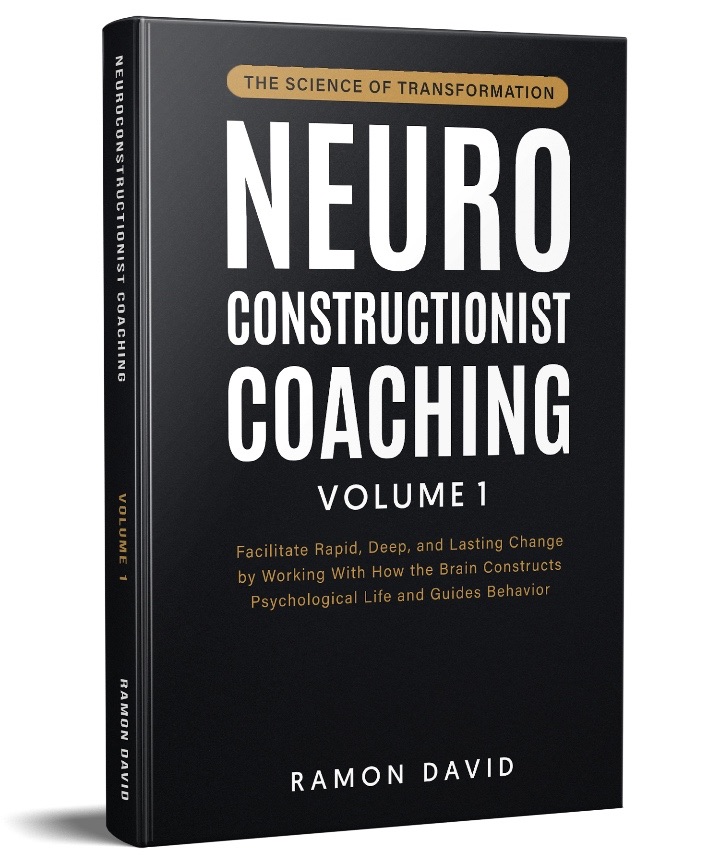
Neuroconstructionist Coaching
Facilitate rapid, deep, and lasting change by working with how the brain constructs psychological life and guides behavior.
The hardcover edition is included in the program.
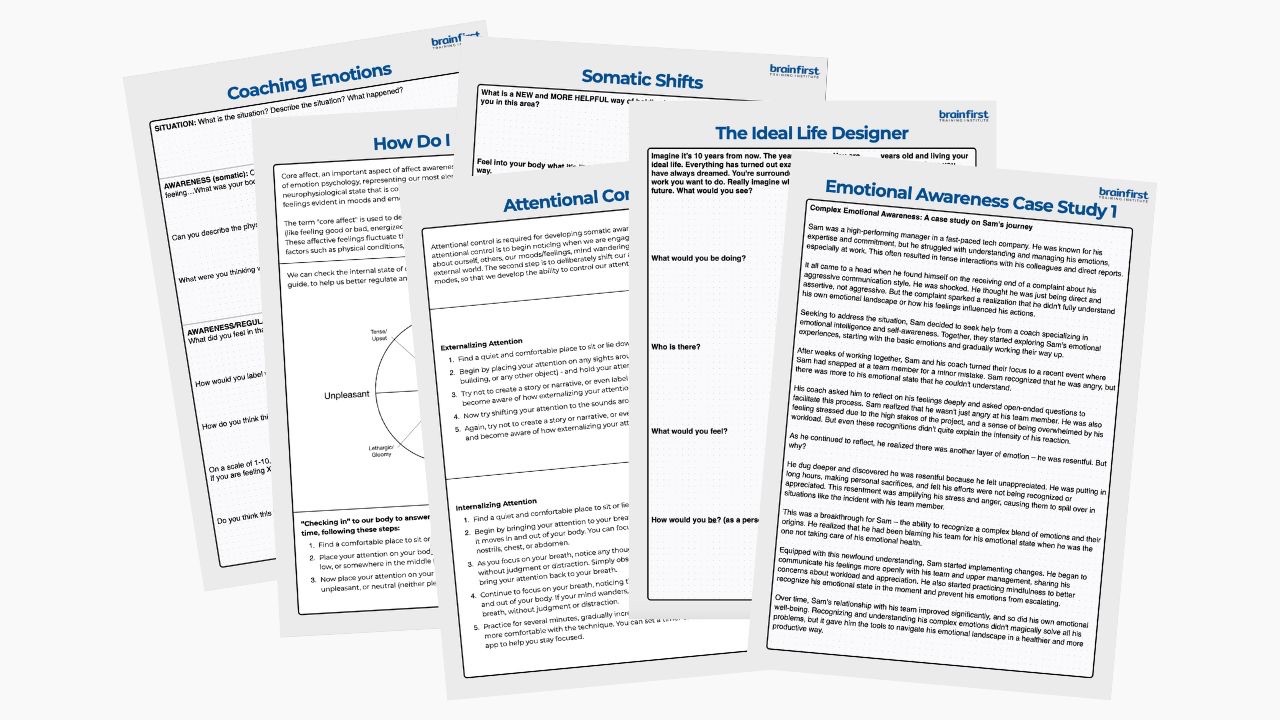
Extensive Coach Toolkit
The toolkit contains resources to help you develop your Neuroconstructionist Coaching skills—to facilitate rapid, deep, and lasting change.
Unlike many other training providers, you get lifetime access to all educational materials and resources.
Bonus Business Training
While our focus is developing transformational coaching skills, the Bonus Business Training will help you launch your business or break through to that next level if you're already in business.
Amplify your impact and accelerate your success. Comprehensive step-by-step training, with BrainFirst Institute founder Ramon David.

Your Program Facilitators

Ramon David, MSc
Ramon is the founder of BrainFirst® Institute, and the creator of the Neuroconstructionist Coaching methodology. Ramon holds a Master's degree in Neuroscience and has conducted research across several domains of human psychology and behavior. He has 15,000+ hours of coaching, training and mentoring experience, has trained thousands of coaches and professionals, and is the author of Neuroconstructionist Coaching.

Divya LV Jegasundaram, MCC
Divya Jegasundaram is an International Coaching Federation Master Certified Coach (MCC) and works in the areas of Executive, OD and Life Coaching. After spending 13 years in the corporate world, Divya transitioned into coaching in 2013. Divya has 10,000+ hours of coaching and mentoring experience, and has trained over 1200 coaches.
Program Dates & Times
February 2027 Cohort (enrollment opening soon)
February 1st to December 1st, 2027.
Preparation materials are sent out the week before. Self-study materials are provided throughout the program. Live sessions are as follows:
Neuroscience Coach Training
12 weekly live sessions from February 1st to April 19th, 2027.
Live sessions are on Mondays (2 hours). Choose from:
- Group 1: 11am Pacific / 2pm Eastern / 7pm London (check your local time), or
- Group 2: 3pm Pacific / 6pm Eastern (check your local time)
ICF Core Competencies Training and Mentoring (ACC Level)
12 weekly live sessions from February 3rd to April 21st, 2027.
Live sessions are on Wednesdays (2 hours). Choose from:
- Group 1: 11am Pacific / 2pm Eastern / 7pm London, or
- Group 2: 3pm Pacific / 6pm Eastern
Neuroconstructionist Professional Coach Training
12 weekly live sessions from May 25th to August 10th, 2027.
Live sessions are on Tuesdays (2 hours). Choose from:
- Group 1: 11am Pacific / 2pm Eastern / 7pm London, or
- Group 2: 3pm Pacific / 6pm Eastern
ICF Core Competencies Training and Mentoring (PCC Level)
12 weekly live sessions from May 27th to August 12th, 2027.
Live sessions are on Thursdays (2 hours). Choose from:
- Group 1: 11am Pacific / 2pm Eastern / 7pm London, or
- Group 2: 3pm Pacific / 6pm Eastern
Neuroconstructionist Master Coach Training
12 weekly live sessions from September 15th to December 1st, 2027.
Live sessions are on Wednesdays (2 hours). Choose from:
- Group 1: 11am Pacific / 2pm Eastern / 7pm London, or
- Group 2: 3pm Pacific / 6pm Eastern
Unable to make it to a live session? We make it as convenient as possible to complete your coach education. Watch the recording in your own time and arrange peer coaching sessions you can partner with another coach from the group to practice. 75% attendance is necessary to meet ICF requirements for the Level 2 path.
Neuroconstructionist Master Coach
Select your tuition option
Neuroconstructionist Master Coach (225-hour program)
- Neuroscience Certified Coach training +
- Neuroconstructionist Professional Coach training +
- Neuroconstructionist Master Coach training +
- ICF Core Competencies Training & Mentoring through our unique Solution-Focused, Client-Centered approach.
- Develop advanced coaching skills through online interactive workshops and guided peer coaching.
- Stay connected to your peers and arrange peer coaching sessions in our private community.
- Learn the theory and professional practice with an extensive coach toolkit, self-study materials, and Neuroconstructionist Coaching Volume 1.
- 175 hours of ICF-accredited coach education (exceeding the 125-hour PCC requirement), plus 40 CCEs (38.5 in Core Competencies).
- 20 hours of mentor coaching, exceeding the ICF requirement (14 group sessions during the program + 6 one-on-one sessions).
- Small group size for an optimal learning environment (10 maximum per ICF group).
Single Payment $11500 or
12 Monthly Payments of $995
Enter your details to be notified when applications open in November for the February cohort:
Frequently Asked Questions
Do I need any prior experience in coaching or expertise in neuroscience?
You do not need prior experience. The program starts with the fundamentals and caters to all participants' experience levels.
What is the weekly time commitment?
Neuroscience Coach (incl. ICF): The time commitment averages 7 hours per week for 12 weeks.
Neuroconstructionist Professional Coach (incl. ICF): The time commitment averages 7 hours per week for 12 weeks.
Neuroconstructionist Master Coach: The time commitment averages 4 hours per week for the 12 weeks.
Total hours include attending the live sessions, completing the exercises, observation diaries, and peer coaching. 75% attendance is necessary to meet ICF requirements for the Level 2 PCC credential.
What language is the program delivered in?
The program is delivered in English. In-real-time captions/subtitles are also available during the sessions.
What are the system requirements for the calls?
Zoom is used for the calls. System requirements are located here. A stable Zoom connection is required to attend the calls.
What is the program withdrawal policy?
If you withdraw from the program the following policy will decide whether you are entitled to a refund. Your eligibility to receive a refund is entirely dependent upon when you make the request.
If you apply for a refund 61+ days before the training program commences, a full refund (minus a $250 non-refundable registration fee and any financial transaction costs e.g. PayPal, card or bank transfer fees) will be provided.
If you apply for a refund within 60 days of your original training commencing, or if your training has already commenced, no refund will be issued.
Once enrolled if you require to be transferred to a future course offering, a $250 course transfer fee is payable plus any difference between your original tuition fee and the new tuition fee.