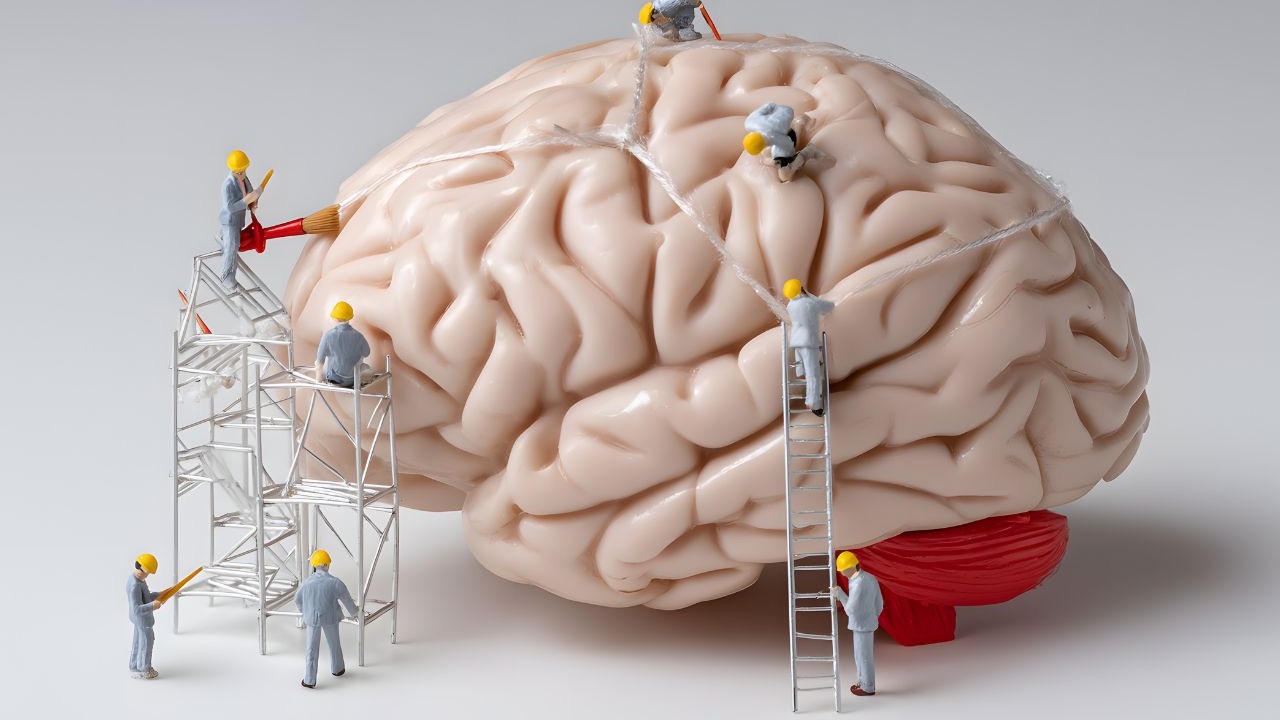
Neuroconstructionist Coaching for Transformation

 February 26, 2024
High-impact coaching goes beyond behavioral adjustment to reshape how we perceive, interpret, and respond to our world. This deeper level of change, often described as second-order change, doesn't just modify behavior; it reworks the conceptual architecture through which we construct meaning.
While first-order change operates within an existing system—altering habits, refining skills, improving efficiency—second-order change alters the system itself. It reshapes the meaning structures we use to make sense of experience, loosening limiting patterns and opening new possibilities. This kind of transformation is genuinely constructive: it emerges from a change in how the brain assembles experience, not from surface modifications to behavior.
The Neuroconstructionist model offers a foundation for understanding how such deep change occurs, revealing that mental life is not static but continuously built and rebuilt by brain networks from prior learning and the meaning we assign to signals in context.
The Neuroconstructionist Approach: How the Brain Builds Experience
Neuroconstructionist Coaching holds that experience—perceiving, remembering, imagining, thinking, feeling, and acting—is constructed in real time from three core ingredients:
- Conceptual knowledge: stored learning and meaning templates that interpret signals from the body and the world. Of the three, this is foundational.
- Interoceptive input: signals from the body's internal state, experienced as core affect.
- Exteroceptive input: sensory signals from the external environment.
These ingredients never operate alone. They are interpreted within a contextual frame (social, cultural, and situational) and modulated by attention, which together bias which conceptual priors are recruited and which signals are sampled.
Consistent with predictive processing, the brain does not passively perceive the world; it actively predicts it, continually updating its generative model from prior experience and adjusting how we feel, think, and act. The result is that we don't simply experience the world as it is; we experience the world as our brain has constructed it to be.
By working with the ingredients and processes that shape constructed experience, coaching can help form new and more adaptive patterns of perception, emotion, and action.
Conceptual Polarities: Where the Deepest Leverage Sits
At the core of transformation lies conceptual knowledge: the lens through which we interpret and construct reality. Among the structures within conceptual knowledge, one carries unusual weight: the conceptual polarity, a learned, binary evaluative axis (e.g., strong vs. weak, selfless vs. selfish, worthy vs. unworthy). A polarity isn't a neutral description. It's an axis with a preferred pole—one side moralized as good, the other as bad—that quietly decides what counts as worthy, acceptable, or safe, and therefore who we're allowed to be.
When a polarity is active, it doesn't announce itself as an abstract belief. It shows up across experience at once—in feeling, action, perception, and thought—each expressing the same evaluative axis in a different register. That convergence is the signature of polarity-level organization.
Because they are evaluative, conceptual polarities do more than color experience; they govern which actions feel permitted or off-limits:
- They shape perception. When strong vs. weak organizes a moment, ordinary pressure signals a test of adequacy rather than a passing state, and the same bodily arousal reads as threat.
- They constrain action. When disciplined vs. lazy is moralized, rest forecasts "lazy," so recovery, saying no, or slowing down feel like failures to be defended against.
- They define identity. When worthy vs. unworthy runs across nearly every domain, everyday cues become tests of whether one belongs, and the field of viable moves collapses.
Conceptual polarities are assembled over time from personal experience, cultural teaching, emotional reinforcement, and role expectation. They are not fixed truths, but neither do they yield to persuasion. Crucially, durable change is not a matter of moving to the "better" pole—flipping the axis leaves the rule intact. It comes from loosening the axis itself, retiring its moral force, and replacing it with a continuum that preserves what matters without turning every moment into a test of who you are.
Coaching as a Constructive Process
Neuroconstructionist Coaching works at the level of how experience is constructed, engaging the deeper structures of meaning rather than surface behavior. In practice, this involves:
- Recognizing when a polarity is organizing the moment. Coachees first come to see how an active evaluative axis is shaping their experiences, emotions, and behavior—often visible as the same axis expressed across feeling, action, perception, and thought.
- Reading the domains that shape experience. By examining the influence of context, core affect, and core motives, coachees see how these factors converge to hold a pattern in place.
- Loosening the axis, not flipping it. Through dialogue, reflection, and well-designed experience, the polarity's moral grip is retired so the moment stops asking "Am I good or bad?" and starts asking "What fits here?"
For change to be truly integrated, conceptual shifts must be accompanied by affective and embodied change. Feeling differently in the relevant context (a shift in core affect) is part of what allows a conceptual change to hold. Without that integration, transformation stays theoretical rather than lived.
The Power of Constructed Change
Coaching for transformation is not about teaching new strategies; it is about changing how we make meaning. The Neuroconstructionist approach shows that experience is continuously shaped by predictive models, conceptual knowledge, and affective states—so deep change happens when we reshape the constructs that organize mental life.
By working with conceptual polarities, coaching shifts how we interpret reality, opening new ways of thinking, feeling, and acting. This is the essence of second-order change: not adjusting behavior, but transforming how mental life itself is built.

Ramon David, MSc
Founder, BrainFirst Inc.
References
- Barsalou, L. W. (2009). Simulation, situated conceptualization, and prediction. Philosophical Transactions of the Royal Society B: Biological Sciences, 364(1521), 1281–1289.
- Barsalou, L. W. (2012). The human conceptual system. Annual Review of Psychology, 63, 23.1–23.29.
- David, R (2026). Neuroconstructionist Coaching Volume 1. BrainFirst Publishing.
- Gendron, M., & Barrett, L. F. (2009). Reconstructing the past: A century of ideas about emotion in psychology. Emotion Review, 1(4), 316–339.
- Kelly, G. A. (1955). The psychology of personal constructs (Vols. 1 & 2). Norton.
- Russell, J. A. (2003). Core affect and the psychological construction of emotion. Psychological Review, 110(1), 145–172.