Neuroconstructionist Coaching for Transformation: The Power of Conceptual Polarities

 February 26, 2024
High-impact coaching goes beyond behavioral adjustments to fundamentally reshape how we perceive, interpret, and respond to our world. This level of change, known as second-order change, does not just modify behaviors but restructures the conceptual framework through which we construct meaning.
While first-order change operates within an existing system—altering habits, refining skills, or improving efficiency—second-order change restructures the system itself. It rewrites the mental blueprints that we use to make sense of our experiences, enabling us to break free from limiting patterns and open ourselves to new possibilities. This transformation is deeply constructive, in that it emerges from changes in the way the mind integrates experience, rather than through superficial modifications to behavior.
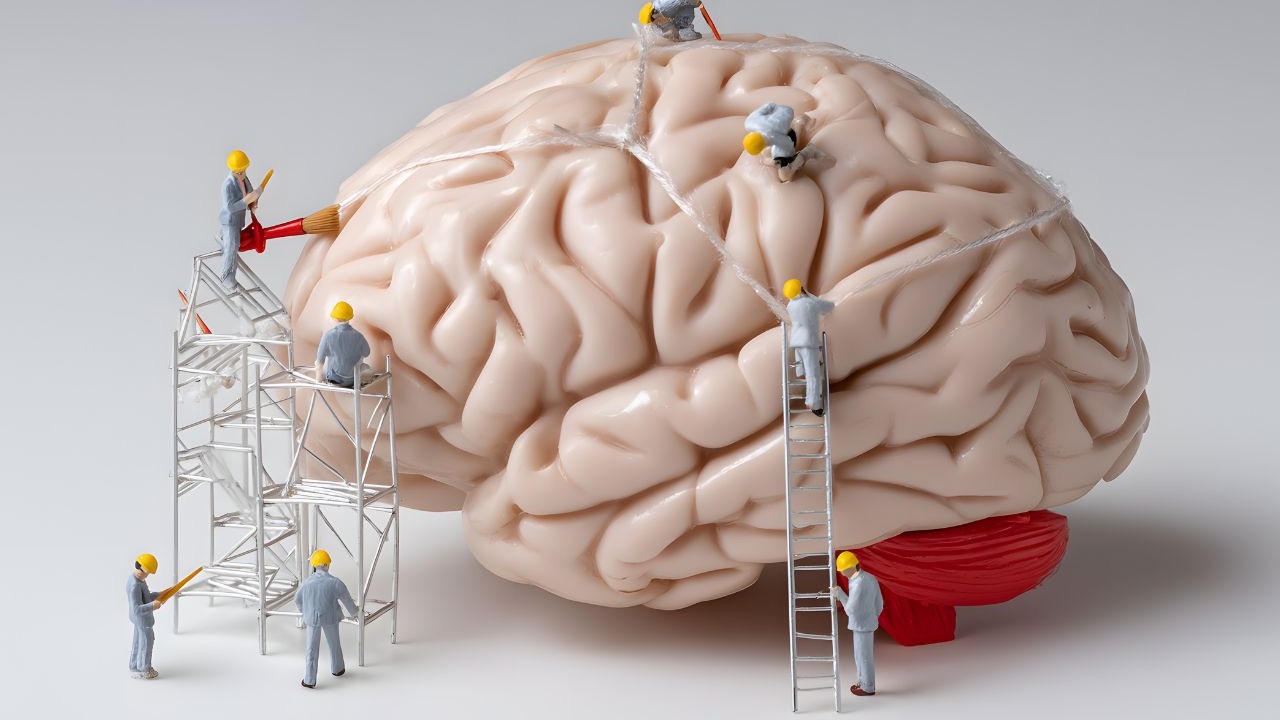
The Neuroconstructionist Model provides a foundation for understanding how such deep transformation occurs, revealing that our mental life is not static but actively built and rebuilt by brain networks based on prior experience and the meaning we give to sensory signals in context.
The Neuroconstructionist Approach: How the Brain Builds Experience
The Neuroconstructionist Model highlights how experiences—perceiving, remembering, imagining, thinking, feeling, and acting—are constructed in real time by multiple interacting ingredients, including:
- Conceptual Knowledge: the mental representations that shape how we organize and interpret experiences.
- Context: the influencing social, cultural, and situational factors.
- Interoceptive Inputs: signals from the body's internal state, experienced as core affect.
- Exteroceptive Inputs: sensory inputs from the external environment.
- Attention: the mechanism that determines which aspects are prioritized and which are inhibited for representation in conscious experience.
According to predictive processing, the brain does not passively perceive the world, it actively predicts it. It continuously updates its internal models based on past experiences, adjusting how we feel, think, and act in different situations. The result? We don’t just experience the world as it is, we experience the world as we have constructed it to be.
By shifting the ingredients that shape constructed experience, coaching can create new and more adaptive patterns of perception, emotion, and action.
Conceptual Polarities: The Gateway to Restructuring Experience
At the core of transformation lies conceptual knowledge—the lens through which we interpret and construct reality. One type of conceptual knowledge structures—in the brain's generative model—are conceptual polarities: subjective, bipolar, mental frameworks that we use to define meaning.
- Conceptual polarities shape perception, e.g., Stress = Weakness ↔ Stress = Growth. When stress sits on the weakness pole, pressure signals threat and avoidance. When it sits on the growth pole, the same sensations signal possibility and resilience.
- Conceptual polarities influence action, e.g., Failure = Incompetence ↔ Failure = Information. When failure is linked to incompetence, risk-taking collapses. When linked to information, experimentation and learning expand.
- Conceptual polarities define identity, e.g., Creative = No ↔ Creative = Yes (or) Not Creative ↔ Capable of Creativity. When the self is organized around “not creative,” opportunities to innovate are filtered out. When reconstructed as “capable of creativity,” new actions, roles, and expressions become reachable.
Conceptual polarities are not fixed truths. They are mental models that can be reshaped. By engaging in coaching conversations that challenge, expand, or redefine conceptual polarities, we can shift how we interpret reality—leading to new and more empowering experiences.
Coaching as a Constructive Process: Rewiring Experience for Transformation
Neuroconstructionist Coaching works at the level of how we construct experience, going beyond surface-level intervention and engaging with the deeper ingredients of mental life. This involves:
- Bringing awareness to limiting conceptual polarities. Coachees must first recognize how their current conceptual polarities shape their experiences, behaviors, and emotions.
- Exploring the domains that shape experience. By investigating the influence of context, core affect, and core drives, coachees can see how different factors contribute to their patterns.
- Reconstructing more adaptive conceptual polarities. Through dialogue, reflection, and experiential learning, coachees develop new mental models that lead to different and more empowering experiences.
For transformation to be truly integrated, conceptual shifts must be accompanied by affective and embodied changes. This means that feeling differently in a given context (shifts in core affect) is essential for a conceptual change to be sustained at the neurological level. Without this integration, transformation remains theoretical rather than lived.
The Power of Constructed Change
Coaching for transformation is not about teaching new strategies but about reconstructing the way we make meaning. The Neuroconstructionist approach reveals that experience is continuously shaped by predictive models, conceptual knowledge, and affective states, meaning that deep change happens when we reshape the foundational constructs that define mental life.
By working with conceptual polarities, coaching enables us to shift our interpretations of reality, leading to new ways of thinking, feeling, and acting. This is the essence of second-order change. It's not just adjusting behavior, but transforming the way mental life itself is built.

Ramon David, MSc
Founder, BrainFirst Inc.
References
- Barsalou, L. W. (2009). Simulation, situated conceptualization, and prediction. Philosophical Transactions of the Royal Society B: Biological Sciences, 364(1521), 1281–1289.
- Barsalou, L. W. (2012). The human conceptual system. Annual Review of Psychology, 63, 23.1–23.29.
- Gendron, M., & Barrett, L. F. (2009). Reconstructing the past: A century of ideas about emotion in psychology. Emotion Review, 1(4), 316–339.
- Kelly, G. A. (1955). The psychology of personal constructs (Vols. 1 & 2). Norton.
- Russell, J. A. (2003). Core affect and the psychological construction of emotion. Psychological Review, 110(1), 145–172.